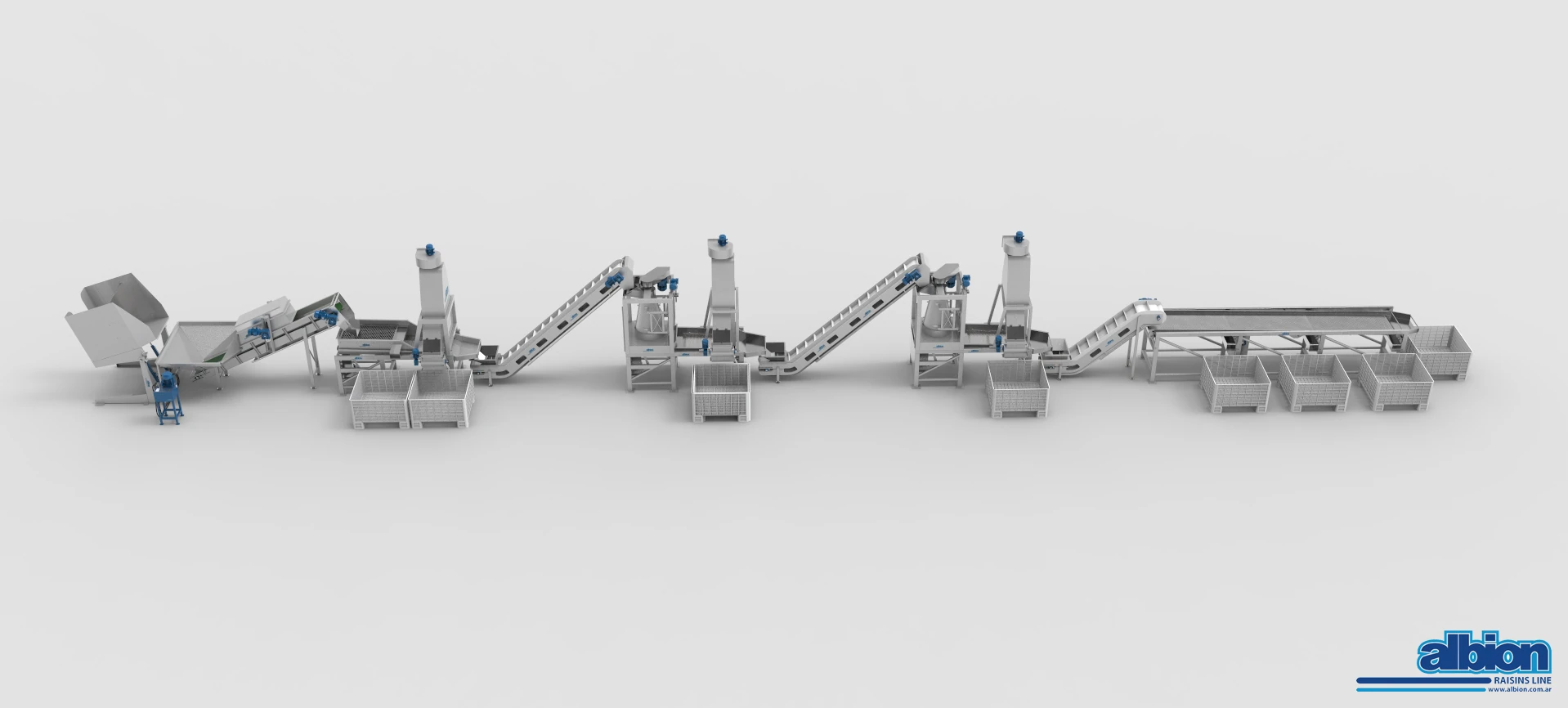
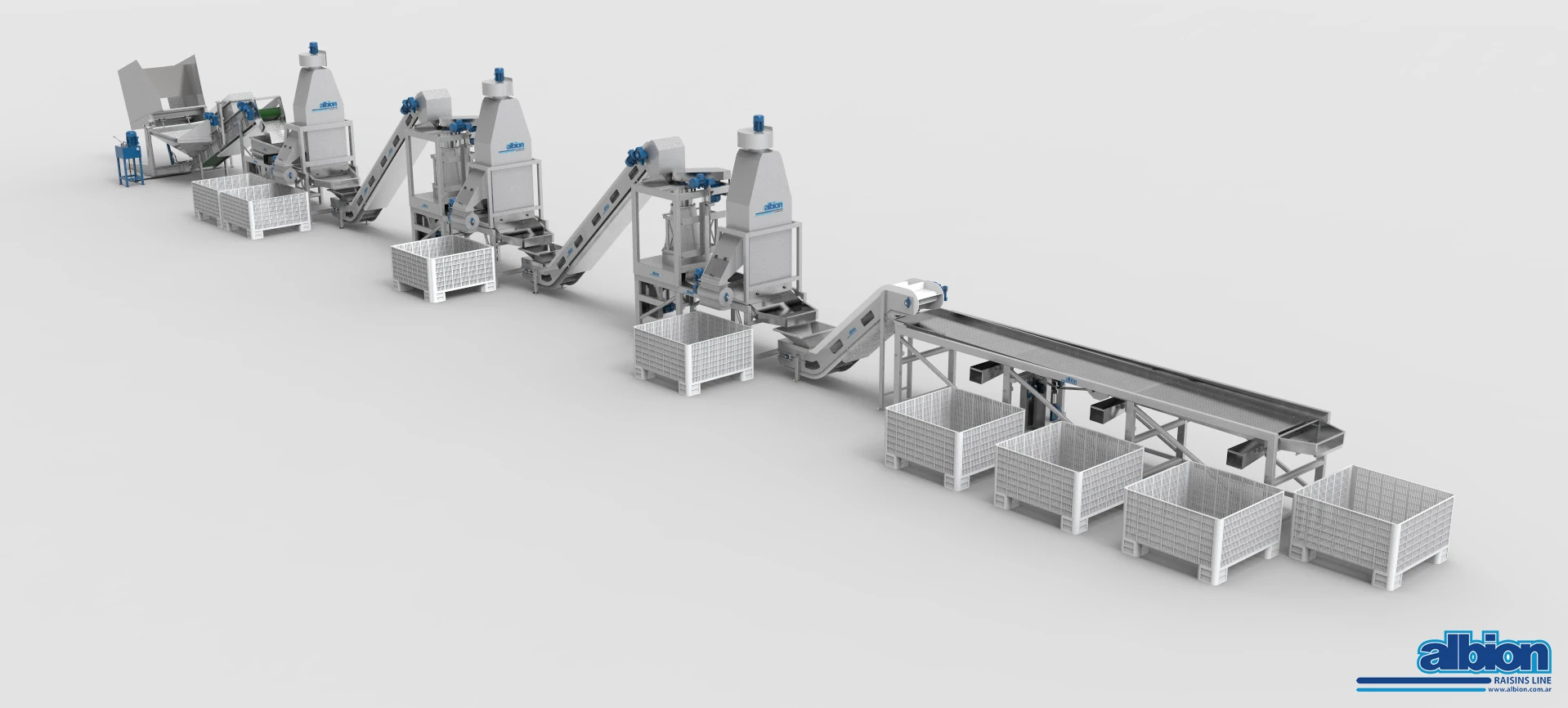
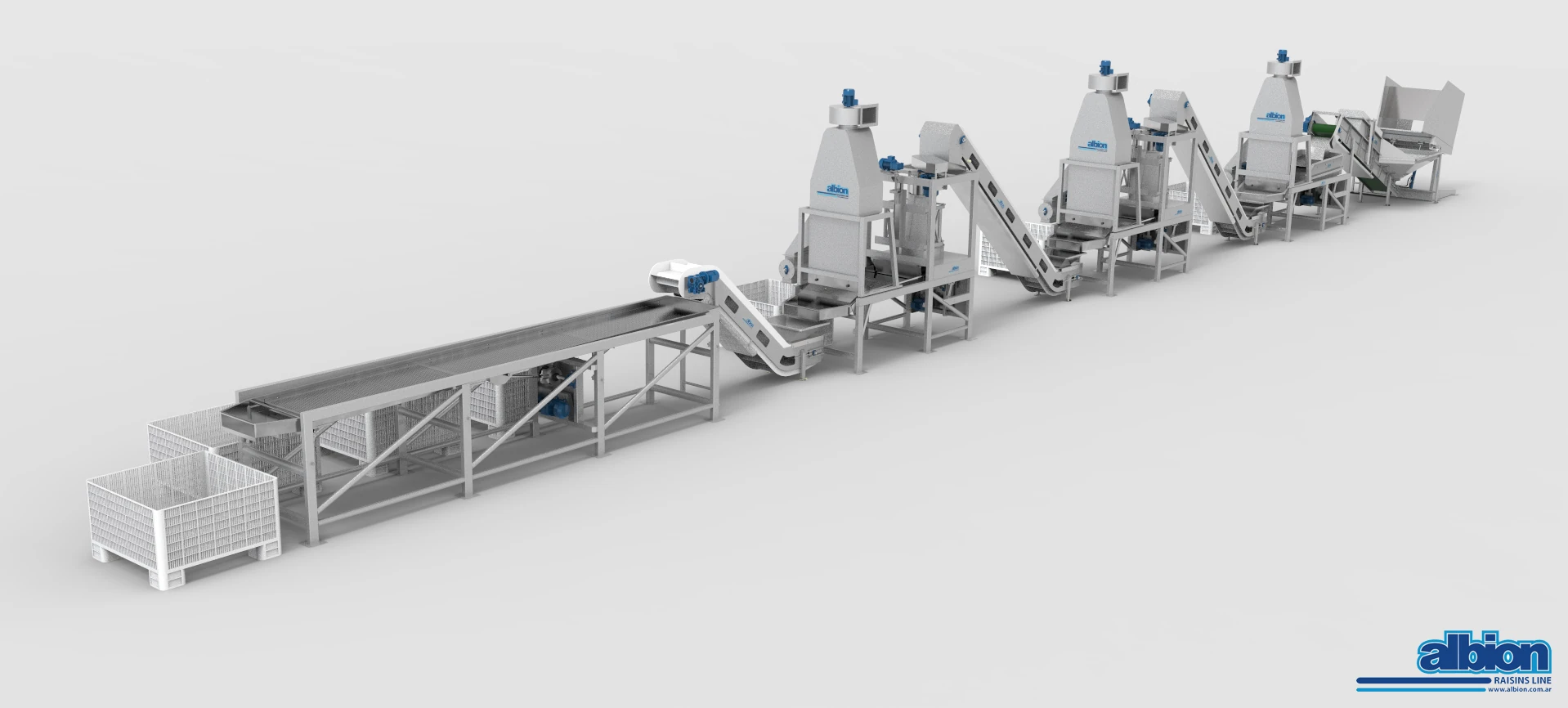
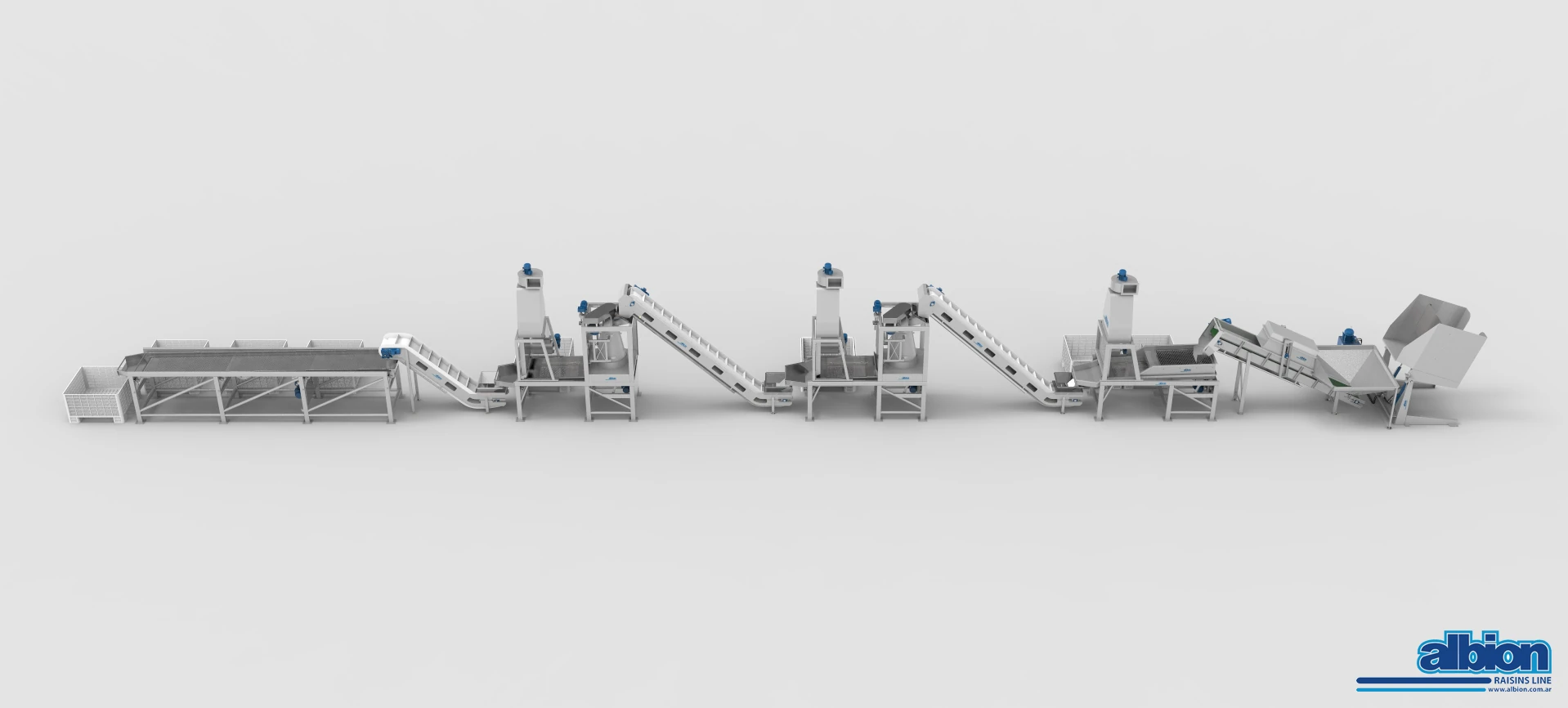
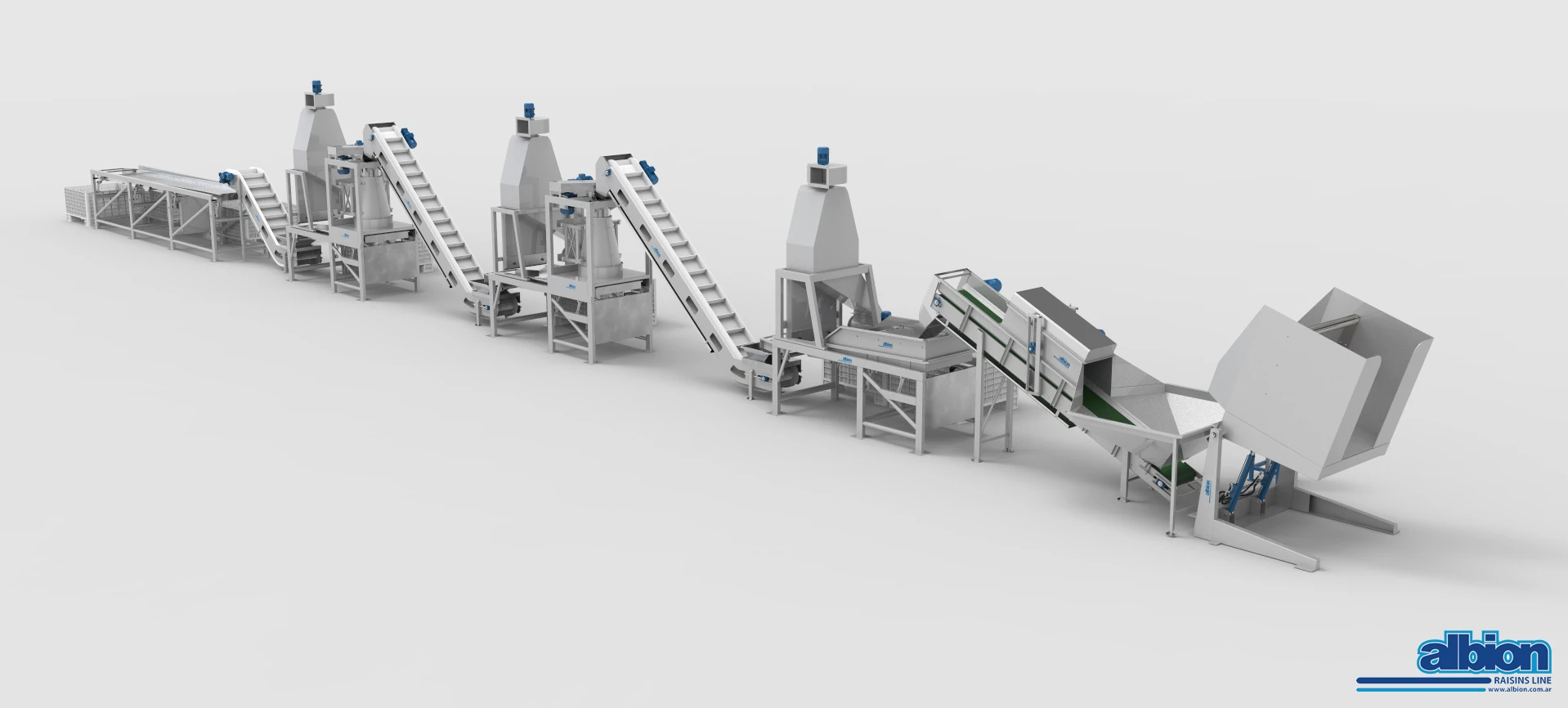
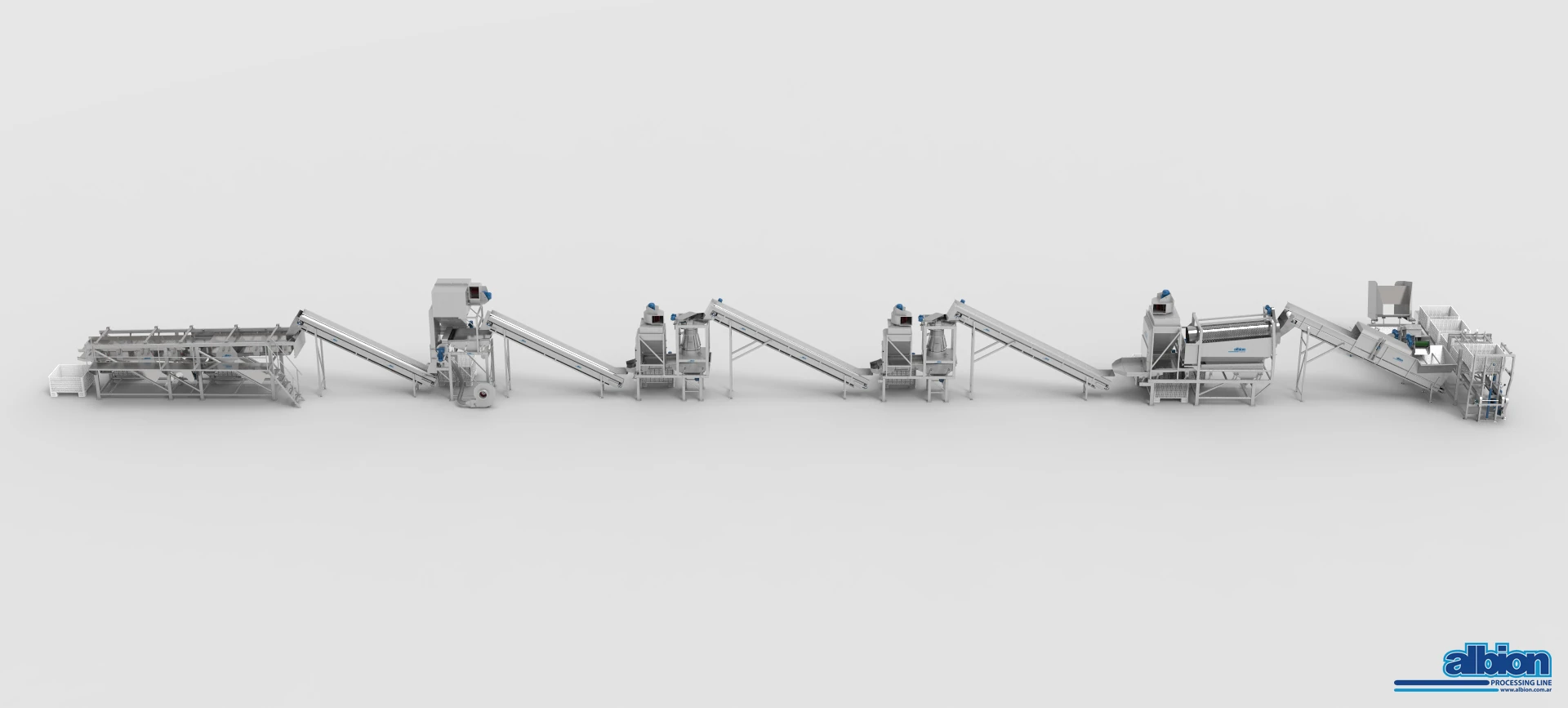
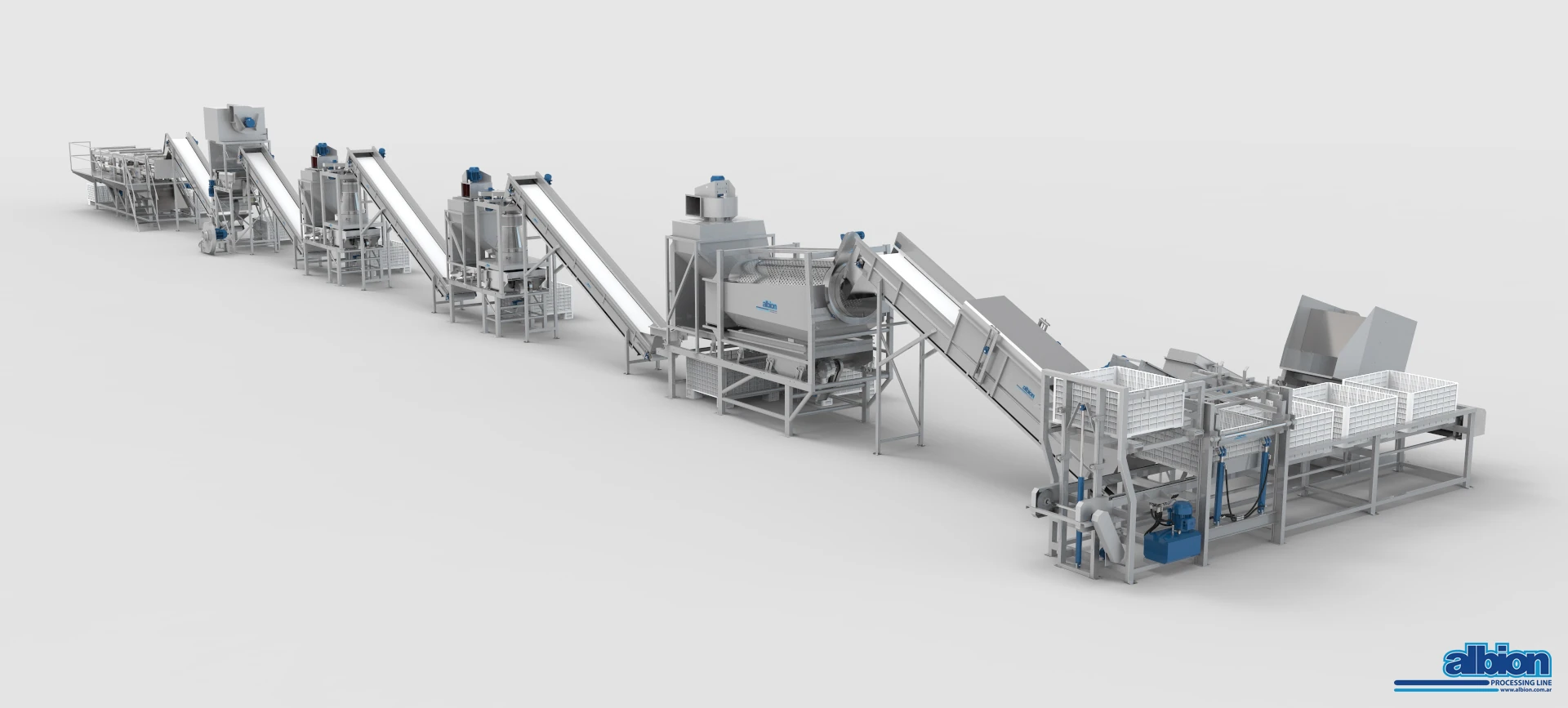
PUA 300 L
Throughput: 250–300 kg/h
- Cascade Washer
- Rinsing and Dewatering Vibrator
- Illuminated Inspection Belt
- Elevator with Brightener

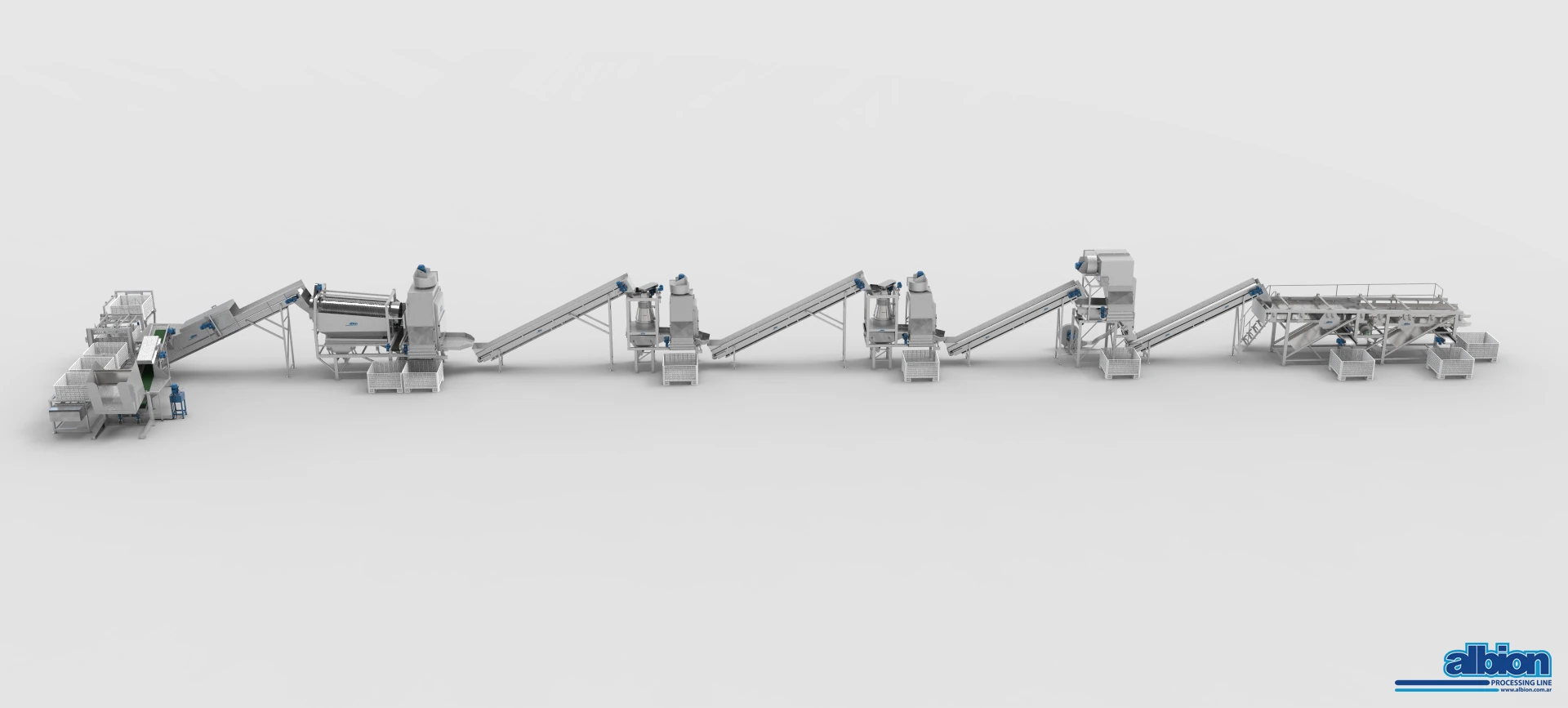
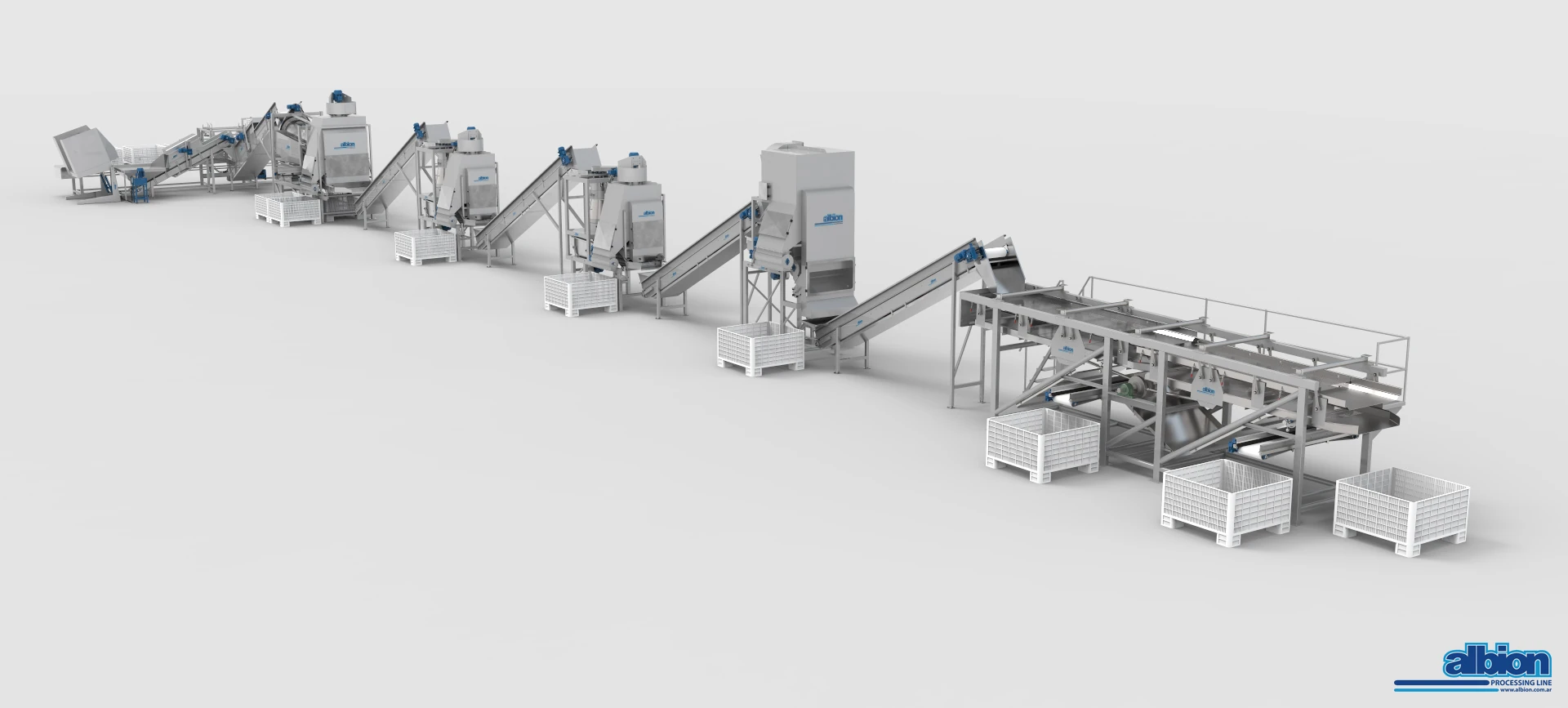
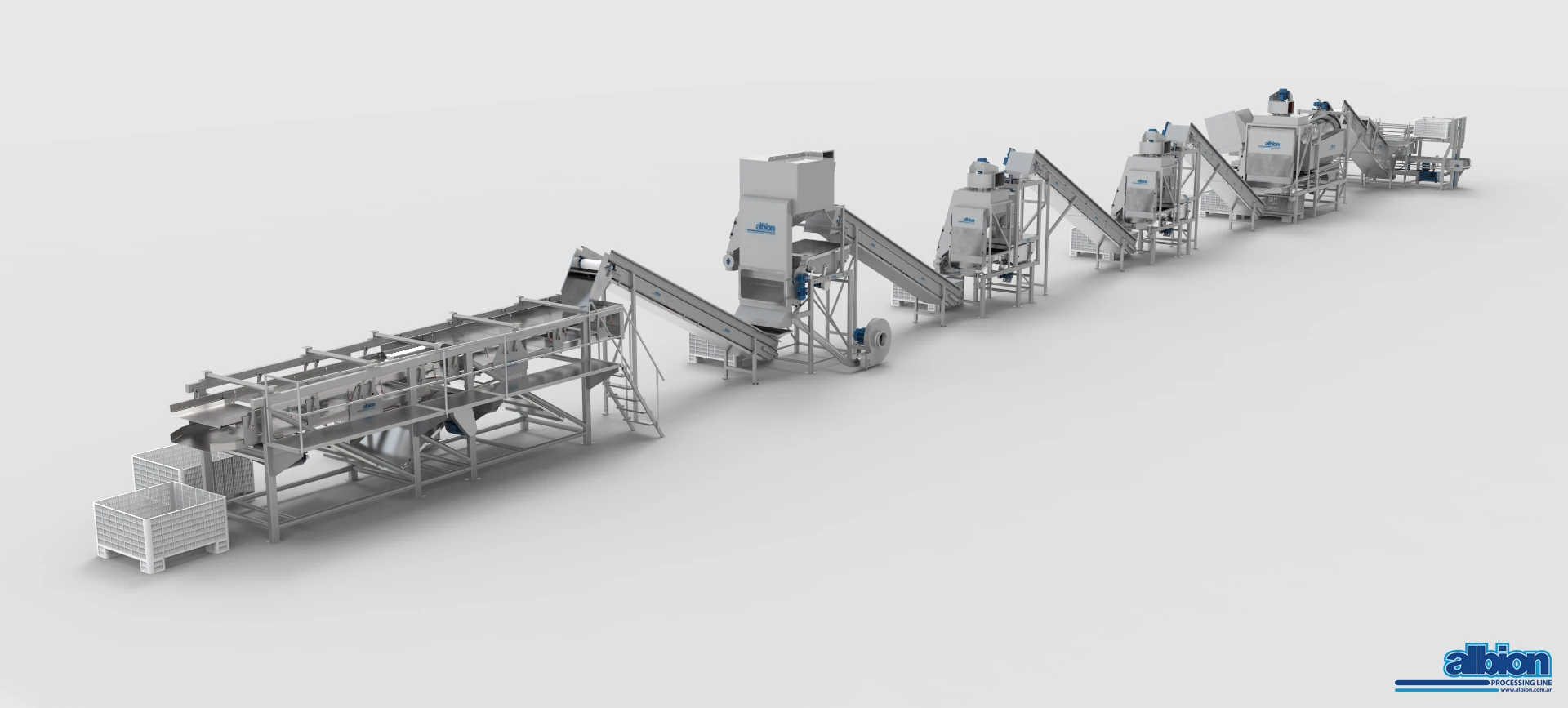
Processing Lines
Throughput: 250–300 kg/h

Throughput: 550–600 kg/h

Throughput: 1.800–1.900 kg/h

Throughput: 250–300 kg/h

Throughput: 550–600 kg/h
Throughput: 1.800–1.900 kg/h
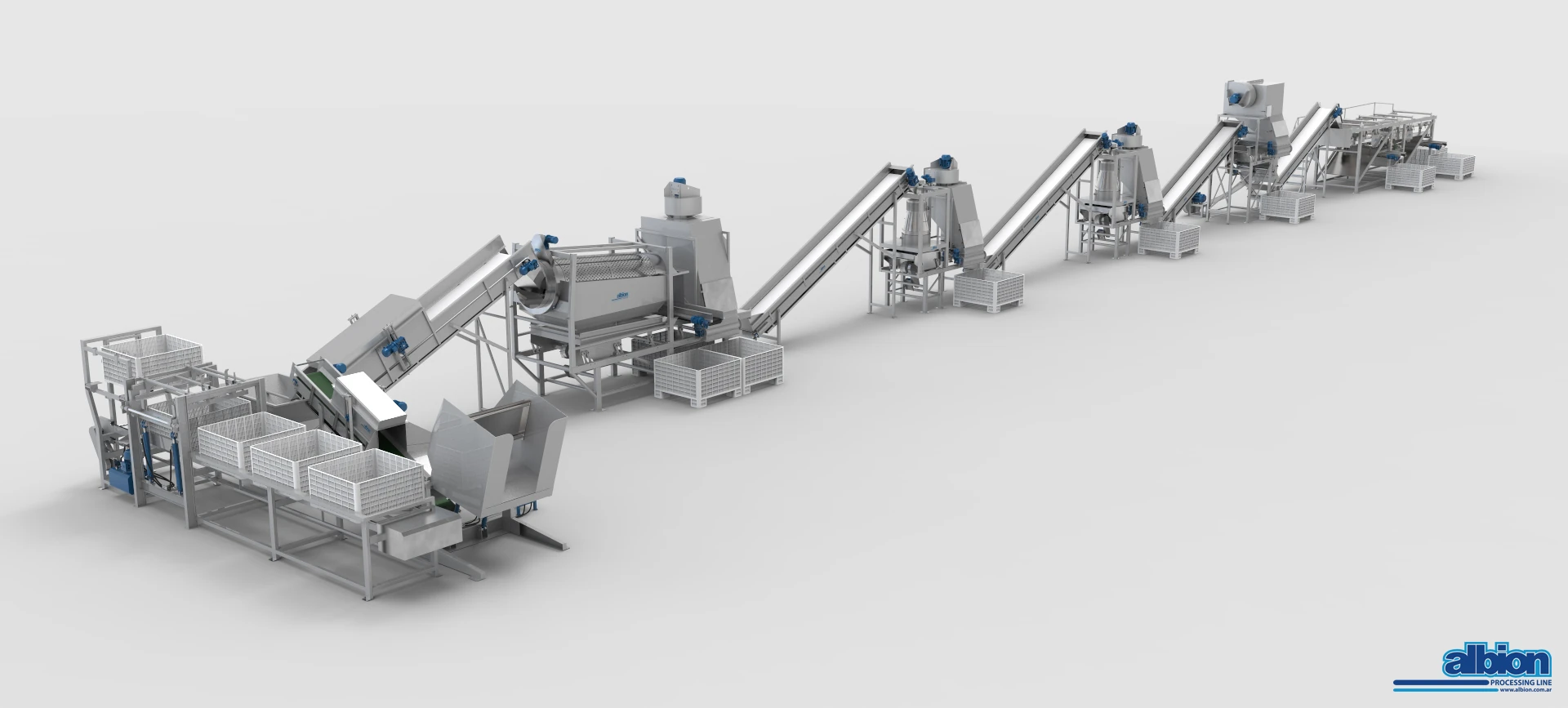
Throughput: 3.000–3.500 kg/h
FAQ
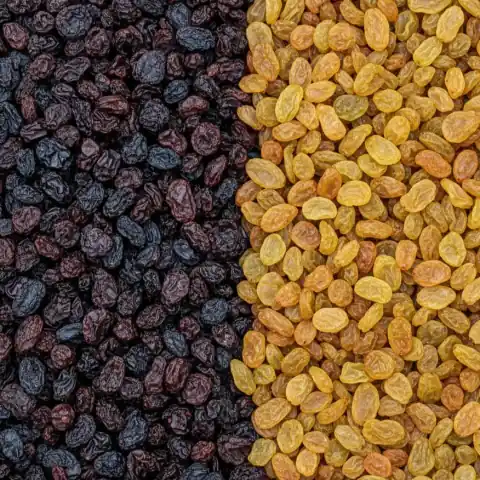
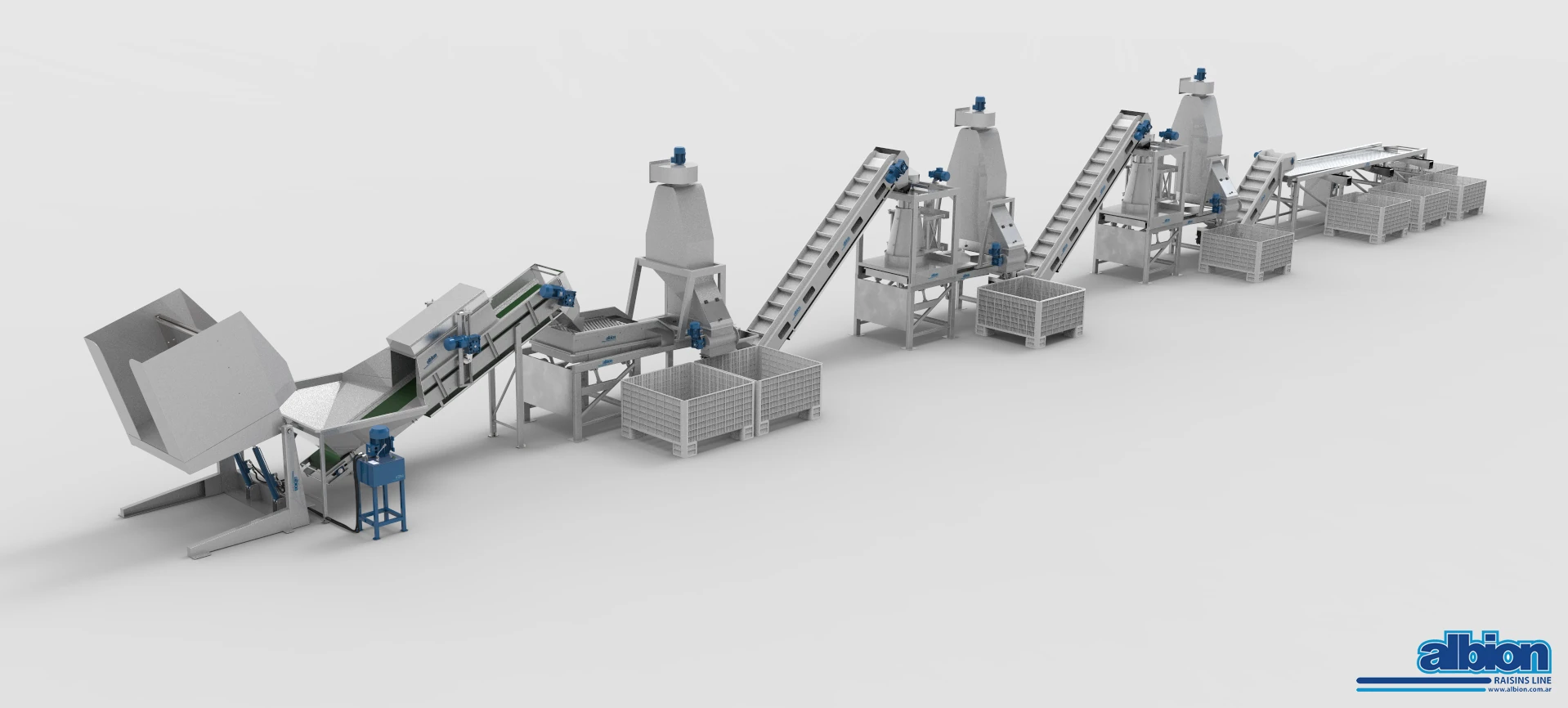
The D (destemming) line takes raisins in clusters and delivers them loose, free of stems and leaves, and graded into commercial sizes. The L (washing and finishing) line starts from already-destemmed raisins and returns them washed, dewatered and at controlled moisture; all three L models also brighten the fruit, and from the PUB 600 L up they weigh it automatically in batches. If your fruit arrives in clusters, start with a D line; if it already comes in loose, the L line is what gives it an export-ready finish.
There are seven configurations: three sizes for washing and four for destemming. The smallest, the PUA 300 (L or D), handles 250–300 kg/h, followed by the PUB 600 (L or D) at 550–600 kg/h and the PUA 2000 L and PUB 2000 D at 1,800–1,900 kg/h. The largest is the PUA 5000 D destemming line, at 3,000–3,500 kg/h. On the washing side, the top model is the PUA 2000 L.
The basic math is hourly capacity × hours per day × days per year. Assuming a standard 8-hour day over 200 days (1,600 hours a year), a PUA 300 covers up to 480 metric tons, a PUB 600 covers 480 to 960 metric tons, and the PUA 2000 L or PUB 2000 D covers up to 3,040 metric tons; above that, destemming goes to the PUA 5000 D, and for washing, get in touch with us. These ranges are a starting point: if your season is short and you need to process everything in a few weeks, it's worth choosing a larger model.
Visys (Turkey) is an optical sorter brand that Albion represents and distributes in Argentina; it isn't equipment Albion manufactures. On washing lines it's installed as the final sorting module, after washing and before packing, where it detects the stones and mineral matter raisins pick up during sun-drying, plus visual defects. It usually makes sense if you export to premium markets.
Every line page has a "Request a Quote" button that opens the quote form for that specific model. If you're not sure yet which model fits, reach out through our contact page. To size the proposal, it helps to know your estimated annual volume, target market (domestic or export), available electrical power (kVA) and water supply, and your warehouse dimensions. With that, we send you a proposal with the modules your case calls for and its pricing.