
Optical Sorting for Raisins, Prunes and Walnuts: When to Add It to Your Line
What Visys and Taiho optical sorters detect in raisins, prunes and walnuts, where they fit in each Albion line and when to add one.
A raisin, prune or walnut line already comes with its own quality control: illuminated inspection conveyors, cleaning screens, aspirators and operators who pull out what they see. Optical sorting comes in where the standard goes beyond what a human eye or a color camera can catch: a stone hidden in the folds of a raisin, a pit fragment inside the flesh, a piece of glass among cracked walnuts.
This guide covers what optical sorting detects in each of those three products, where it fits on an Albion line and when it makes sense to add it.
Before you start: the optical sorters in this guide are not Albion-made. Visys (Turkey) and Taiho (China) are brands that Albion represents and distributes in Argentina. What Albion builds are the processing lines this equipment integrates with.
What optical sorting adds
Both brands rely on machine vision, but their brand pages, which this guide cites throughout, describe different technologies:
- Visys is a Turkish manufacturer founded in 2004 in Istanbul, specialized in optical food sorters. It combines high-resolution RGB cameras, laser scanning, X-ray and hyperspectral sensors to identify and separate pieces with defects, off-spec color or sizing. In nuts, dried fruits and grains, it excels at detecting contaminants: glass, stones, stainless steel, ceramic and metal.
- Taiho is a Chinese company headquartered in Hefei that builds sorting and inspection equipment based on AI visual recognition: optical color and shape sorters, X-ray foreign-object detectors and fruit graders. On Albion walnut lines, its color sorter is the one integrated.
What each one adds depends on the product:
| Product | What it targets | Technology, per the brand page | Albion lines it integrates with |
|---|---|---|---|
| Raisins | Stones and mineral matter from sun-drying; damaged raisins | Visys: RGB cameras and X-ray | Washing and finishing: PUA 300 L, PUB 600 L, PUA 2000 L |
| Prunes | Residual pit fragments inside the flesh | Visys: X-ray | Pitting: CD 4, CD 6, CD 8 |
| Walnuts | Color categories, for example black and extralight | Taiho: color sorting | Cracking and selection: AP 300, AP 700, AP 700 without bin tipper, ASM 700 |
| Walnuts | Shell fragments, glass or metal | Visys: X-ray and hyperspectral | The same cracking and selection lines |
Product by product: where it goes and what it targets
Raisins: the final filter before packing
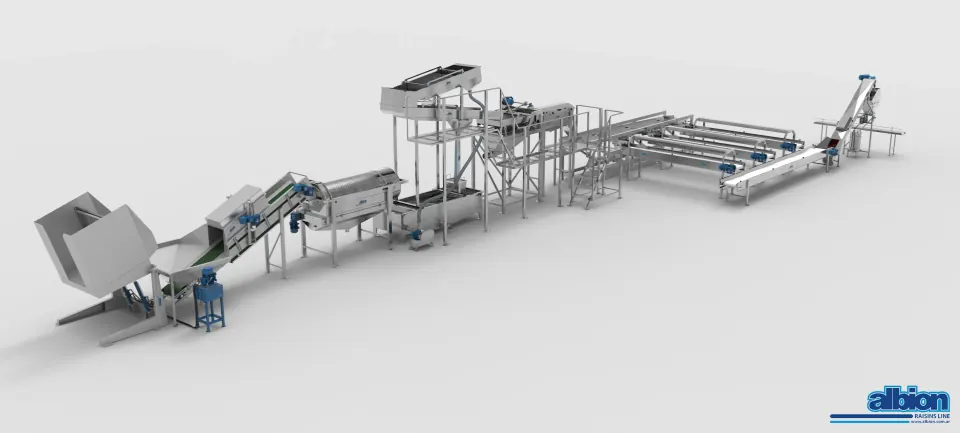
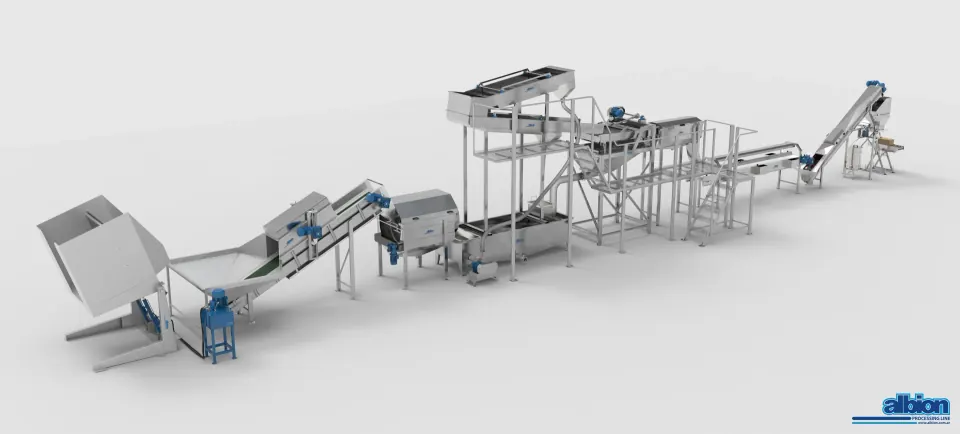
For raisins, the Visys page ties the integration to the washing and finishing lines: the PUA 300 L, the PUB 600 L and the PUA 2000 L. There, the sorter is inserted as the final sorting module, after washing and before packing.
It targets the stones and mineral matter raisins carry over from sun-drying, the most recurring physical contaminant in premium raisins, along with visual defects such as off-spec color or damaged raisins. According to the brand page, it does this with RGB cameras and X-ray.
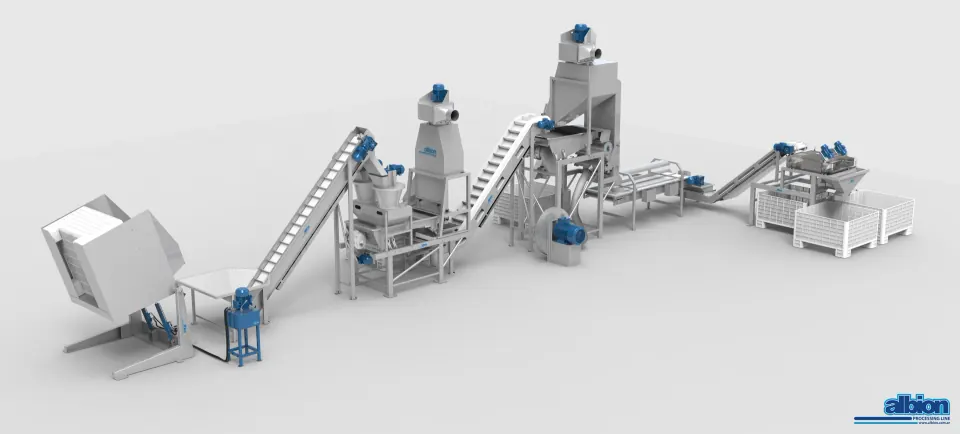
All three L lines already have an illuminated inspection conveyor where the operator checks the raisins before brightening. The Visys page places it where the standard goes beyond what a human eye can catch: a stone hidden in a fold, for example. The brand page doesn’t mention the destemming (D) lines: for raisins, the integration is built around the L line.
More detail in the guide to setting up a raisin line.
Prunes: the pit fragment left inside
On prunes, Visys works after pitting, on the integral CD 4, CD 6 and CD 8 lines. Using X-ray, it identifies residual pit fragments inside the flesh, a critical defect that human inspection cannot reliably catch at industrial speed.
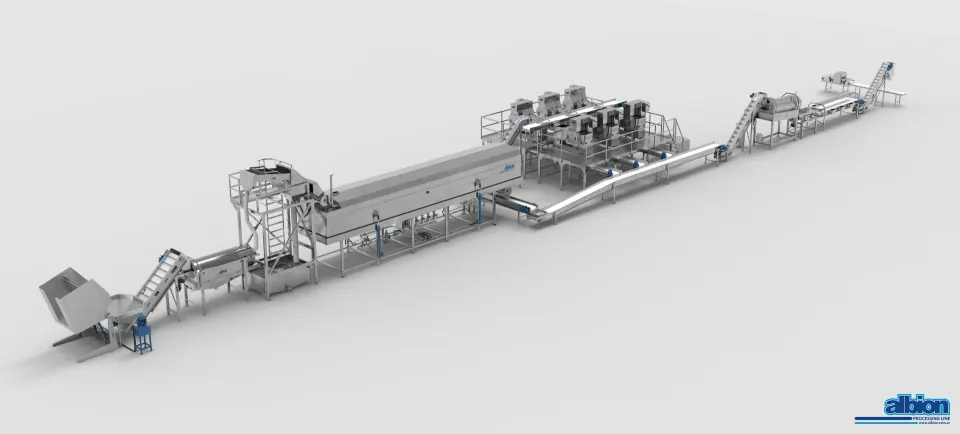
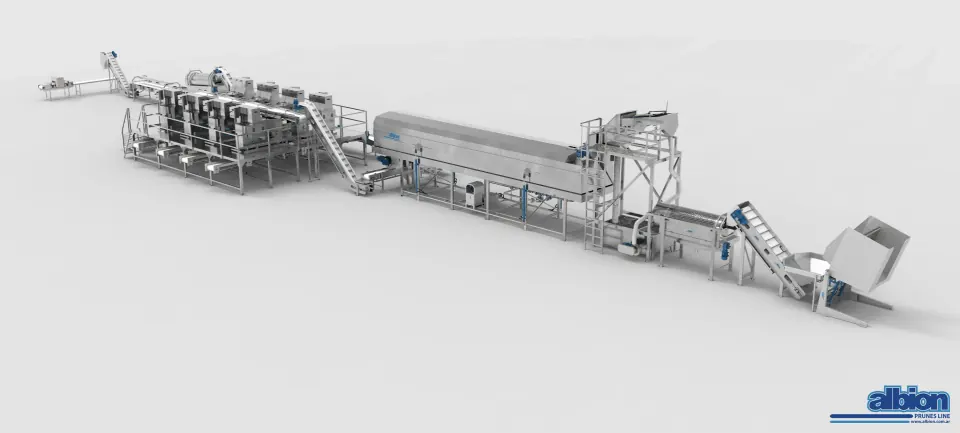
All three lines remove the pit with step-by-step pitter heads and run the fruit over a cleaning screen before the final visual inspection. Visys targets a different defect: the fragment left inside the fruit. It also isn’t the same as the metal detector the CD 6 and CD 8 carry at the exit, which is the final control against metallic contamination.
The brand page doesn’t mention the prune sizing lines: the integration is built around pitting. More detail in the guide to prune processing lines.
Walnuts: color with Taiho, X-ray and hyperspectral with Visys
Both brands show up on walnuts, and both brand pages tie them to the same lines: the cracking and selection lines AP 300, AP 700 and AP 700 without bin tipper, plus the ASM 700 manual kernel selection line.
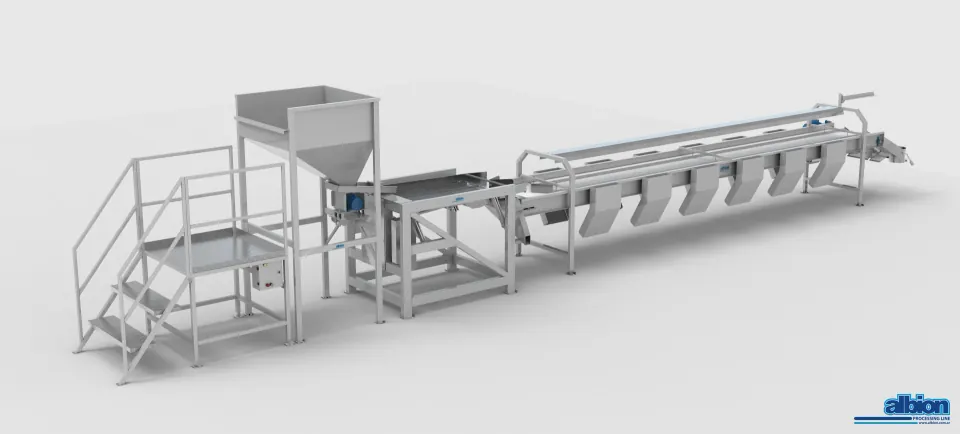
The AP lines separate shell through screens and aspiration, run the kernel over an inspection conveyor and classify it by size; the ASM 700 adds a vibrating screen and a wide conveyor with dedicated lighting for manual selection. Optical sorting adds two different things:
- Taiho adds color sorting. It slots in as a module within the Albion walnut line. The integration shown on its page is an Albion line with a receiving hopper, a bucket elevator, a Taiho optical sorter and two output conveyors that split the product into two color categories: for example, black walnuts and extralight.
- Visys complements Taiho with X-ray and hyperspectral scanning. It detects shell fragments, glass or metal that color cameras alone cannot see. It’s the final module that shields the exporter from claims.
More detail in the guide to walnut processing lines.
Visys and Taiho on walnuts: what each brand page says
| Taiho (China) | Visys (Turkey) | |
|---|---|---|
| What it is | AI-powered optical sorters and machine-vision inspection equipment | Optical sorters with RGB cameras, laser, X-ray and hyperspectral sensors |
| What it adds on walnuts | Color sorting | X-ray and hyperspectral scanning |
| What it separates | Color categories, for example black and extralight | Shell fragments, glass or metal |
| How it integrates | A module within the Albion walnut line | A complement to the Taiho sorter on cracking and selection lines |
| Albion lines | AP 300, AP 700, AP 700 without bin tipper, ASM 700 | AP 300, AP 700, AP 700 without bin tipper, ASM 700 |
Taiho’s catalog also includes X-ray inspection machines, but the walnut-line integration its page describes is color sorting.
Visys models and their technology
The Visys page lists eight models, each with its own detection technology:
| Model | Technology |
|---|---|
| G-ANT | High-resolution RGB camera |
| ORION | Dual laser + camera scan |
| VIREX 900 MULTI | X-ray + RGB + hyperspectral |
| VIREX | X-ray scan |
| AURA XC | Dual laser + hyperspectral |
| AURA | Dual laser |
| SNIPER | Single laser |
| VISORT | Hyperspectral scan |
The page doesn’t assign a model to each fruit: which model fits your line is defined when you inquire.
When it makes sense to add it
The brand pages and product guides point to these situations:
- You export to premium markets. On raisins, Visys is the final sorting step before packing. On prunes, it’s essential where a single pit fragment can trigger a claim. On walnuts, Visys shields the exporter from claims, and Taiho separates extralight from dark walnuts for those markets.
- You want protection against claims. The Visys page describes it as the final module that shields the exporter from claims.
- The defect can’t be seen by eye or at industrial speed. Stones in raisin folds, pit fragments inside the flesh, glass or metal among cracked walnuts: that’s what the brand pages assign to optical sorting.
- You sell walnuts graded by color. That’s Taiho’s job.
- Your raisin volume is in PUB 600 L (550–600 kg/h) or PUA 2000 L (1,800–1,900 kg/h) territory. On a PUA 300 L the investment doesn’t pay off.
How to inquire
If you already know which brand you need, each one has its own page and quote form:
- Visys: brand page · request a quote
- Taiho: brand page · request a quote
If you also need the Albion line, every line page has its own Request a Quote button, or you can reach us through our contact page. To point you in the right direction, tell us what fruit you process, which line you have or plan to install, which defect or contaminant you want to detect and which market you sell to.
One thing to keep in mind: we send the warranty terms for each piece of equipment along with the quote.
Frequently asked questions
- Does Albion manufacture the optical sorters?
- No. Visys (Turkey) and Taiho (China) are brands that Albion represents and distributes in Argentina. Albion manufactures the raisin, prune and walnut lines these sorters integrate with.
- Where does the Visys sorter go on a raisin line?
- On the washing and finishing lines (PUA 300 L, PUB 600 L and PUA 2000 L), as the final sorting module, after washing and before packing. It detects the stones and mineral matter raisins carry over from sun-drying, plus visual defects such as off-spec color or damaged raisins.
- What does Visys detect in pitted prunes?
- Residual pit fragments inside the flesh. It works after pitting, on the CD 4, CD 6 and CD 8 lines, and uses X-ray to find a defect human inspection cannot reliably catch at industrial speed. It isn't the same as the metal detector on the CD 6 and CD 8, which is the final control against metallic contamination.
- On walnuts, what does Taiho do and what does Visys do?
- Taiho adds color sorting, for example to separate black walnuts from extralight. Visys complements the Taiho sorter with X-ray and hyperspectral scanning, detecting shell fragments, glass or metal that color cameras alone cannot see. Both integrate with the AP 300, AP 700 and AP 700 without bin tipper cracking lines and with the ASM 700 kernel selection line.
- Does optical sorting make sense on a small raisin line?
- On raisins, Visys is meant for large lines such as the PUB 600 L or PUA 2000 L, and it usually makes sense if you export to premium markets. On a PUA 300 L the investment doesn't pay off.
- Which Visys model do I need?
- The Visys page lists eight models with different technologies: the G-ANT uses a high-resolution RGB camera, the VIREX uses X-ray, the VISORT uses hyperspectral scanning and the VIREX 900 MULTI combines X-ray, RGB and hyperspectral, among others. The page doesn't assign a model to each fruit, so the right model for your line is defined when you inquire.
- How do I request a quote for Visys or Taiho?
- Each brand has its own page and quote form on the Albion website. If you also need the line, use the Request a Quote button on that line's page or reach us through the contact page. Tell us what fruit you process, which line you have or plan to install, and which defect or contaminant you want to detect.
Lines mentioned in this article
Ready to size your processing line?
Send us your operation's basic data and we'll prepare a proposal sized to your volume and your warehouse.
Request a quote